

The Taste We Forgot: Why Our Modern Diet Needs Bitters Again
From my stone house in the Creuse, where the chicory still comes to market
On market day in my corner of France, the vegetable sellers lay out things most American supermarkets stopped carrying a long time ago: curly frisée, pale Belgian endive, red-veined chicory, dandelion greens in spring. My French neighbours buy them without a second thought. They are simply part of the table.
What they have in common is bitterness. Bitter foods were once on every European table, and bitterness is the one taste our modern diet has almost entirely lost.
How We Lost It
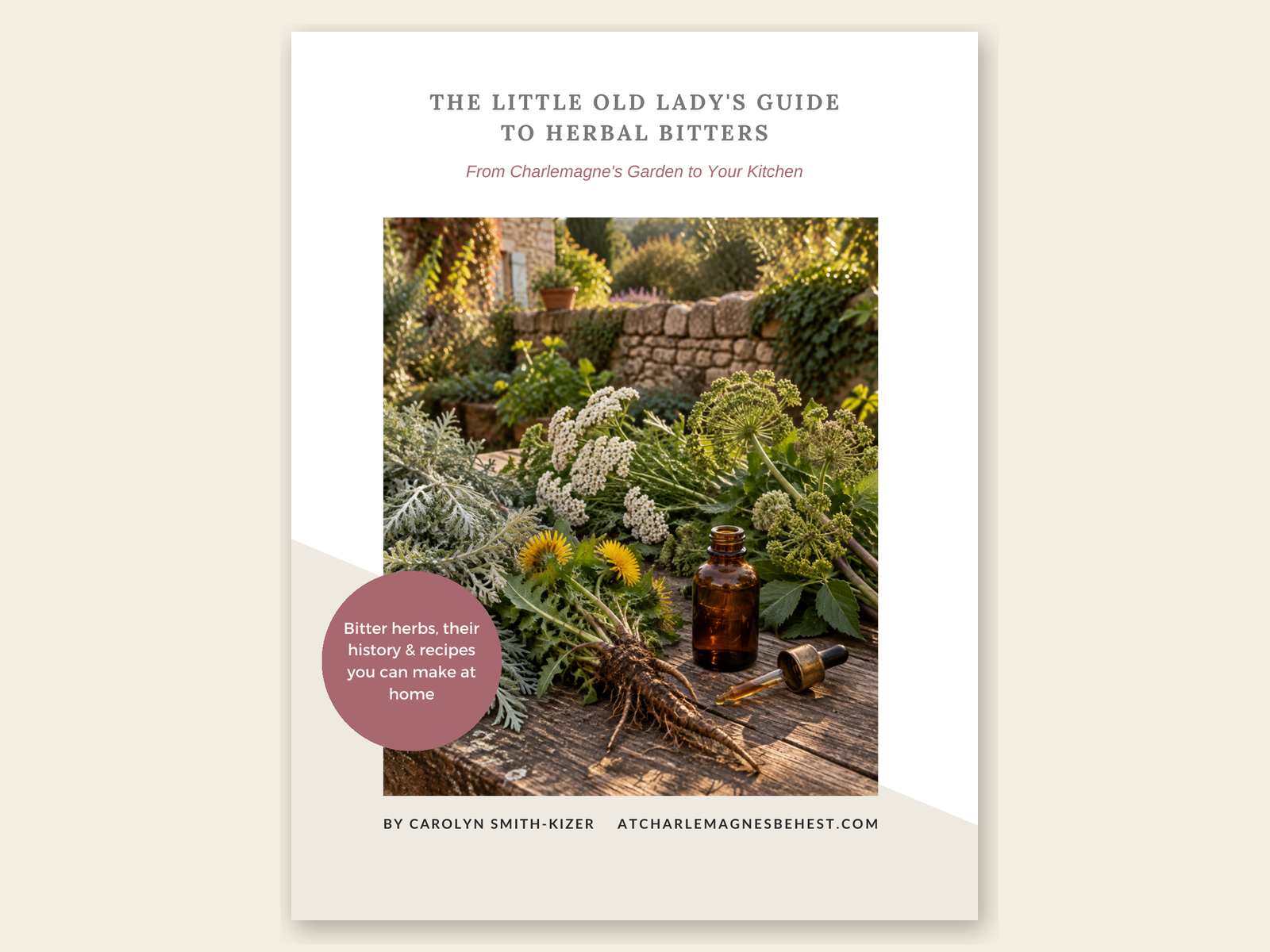
For most of history, bitter foods were simply ordinary food. Wild greens, chicory, the outer leaves of the cabbage, a bitter aperitif before dinner or a digestif after it. Charlemagne required his estates to grow bitter herbs like wormwood, sage and chicory, not as a curiosity but because every household used them.
Then, slowly, we bred and processed the bitterness out. Many of the plant compounds that taste bitter are the same ones nutrition researchers are interested in, and food producers have long worked to remove or mask them because bitter does not sell.1 Our vegetables became milder, our drinks sweeter, and our palates followed. Today many people, children especially, find any bitterness at all unpleasant.
Why Bitter Foods Matter
The old herbalists said that bitter herbs “wake up” digestion. Taste something bitter and your mouth waters, your stomach gets ready, and the whole digestive process begins. Herbalists still use bitters this way, a few drops before a meal, and the traditional explanation is a reflex that starts with the taste on the tongue.2
Modern science has added something surprising. The receptors that detect bitterness are not only on the tongue. We have about twenty-five kinds of bitter receptors, and they turn up throughout the body, including all along the digestive tract, where they help signal the release of gut hormones.3 Researchers are studying how bitter substances affect digestion, appetite and blood sugar. Some of the early results in people are promising, but they are not yet consistent, so this is a field to watch rather than a settled answer.4
Take note of what that means, though. Our ancestors built bitter foods into their meals for centuries, and we are only now learning how much of the body is listening for it.
5 Simple Ways to Bring Bitter Foods Back
- Start dinner with a bitter salad. Frisée, endive, radicchio, rocket or young dandelion leaves, dressed with a good vinaigrette. The French start this way for a reason, as you will see at any French Sunday lunch.
- Cook the greens you used to skip. Braised endive, sautéed chicory, a handful of dandelion greens in your soup. Better still, grow a few yourself; I am planting mine in my French garden.
- Make a morning cup. A simple tea of dried dandelion leaf, lemon balm and a little fennel seed is a gentle place to begin.
- Keep a bottle of herbal bitters. A few drops in a little water about fifteen minutes before a meal is the old way. Bought or homemade, both work. If you like tart, old-fashioned drinks, my Mahonia berry shrub is a cousin of the same tradition.
- Go slowly. If your palate has been sweet for years, bitterness will taste strong at first. Give it a few weeks. It becomes pleasant, and then you start to want it.
A Word of Care
Everyday bitter foods like salad greens are fine for almost everyone. Concentrated herbal bitters are another matter. If you are pregnant or nursing, have gallbladder trouble or stomach ulcers, or take medication, ask your doctor before using herbal bitters. Some bitter herbs, wormwood above all, are strong medicine and need respect.
If You Want to Go Further
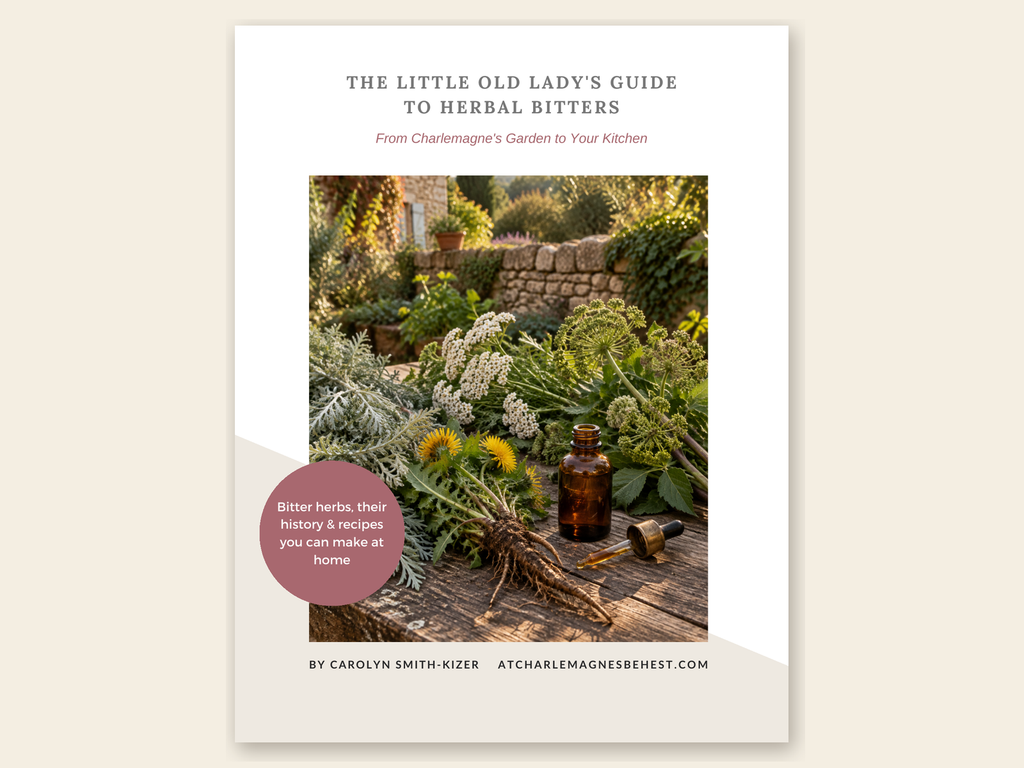
I have written a whole guide on this: The Little Old Lady’s Guide to Herbal Bitters: From Charlemagne’s Garden to Your Kitchen. It is a 40-page illustrated PDF covering the bitter herbs Charlemagne required on his estates, how to grow and harvest them, and how to make your own tinctures, teas, oxymels and blends at home. It is $9.99, and it comes straight to your inbox.
The past is not gone. It is still here, on the market stall, waiting for us to pick it up again.
Notes
- Adam Drewnowski and Carmen Gomez-Carneros, “Bitter Taste, Phytonutrients, and the Consumer: A Review,” American Journal of Clinical Nutrition 72, no. 6 (2000): 1424–35.
- Michael K. McMullen, Julie M. Whitehouse and Anthony Towell, “Bitters: Time for a New Paradigm,” Evidence-Based Complementary and Alternative Medicine (2015), https://pmc.ncbi.nlm.nih.gov/articles/PMC4446506/.
- Caroline P. Harmon, Daiyong Deng and Paul A. S. Breslin, “Bitter Taste Receptors (T2Rs) Are Sentinels That Coordinate Metabolic and Immunological Defense Responses,” Current Opinion in Physiology (2021), https://pmc.ncbi.nlm.nih.gov/articles/PMC7963268/.
- Peyman Rezaie, Vida Bitarafan, Michael Horowitz and Christine Feinle-Bisset, “Effects of Bitter Substances on GI Function, Energy Intake and Glycaemia: Do Preclinical Findings Translate to Outcomes in Humans?” Nutrients 13, no. 4 (2021), https://pmc.ncbi.nlm.nih.gov/articles/PMC8072924/.
This post shares traditional knowledge for educational purposes and is not medical advice.
©2026 Carolyn Smith-Kizer
If this work is useful to you, you can buy me a coffee — buymeacoffee.com/cskizer
