
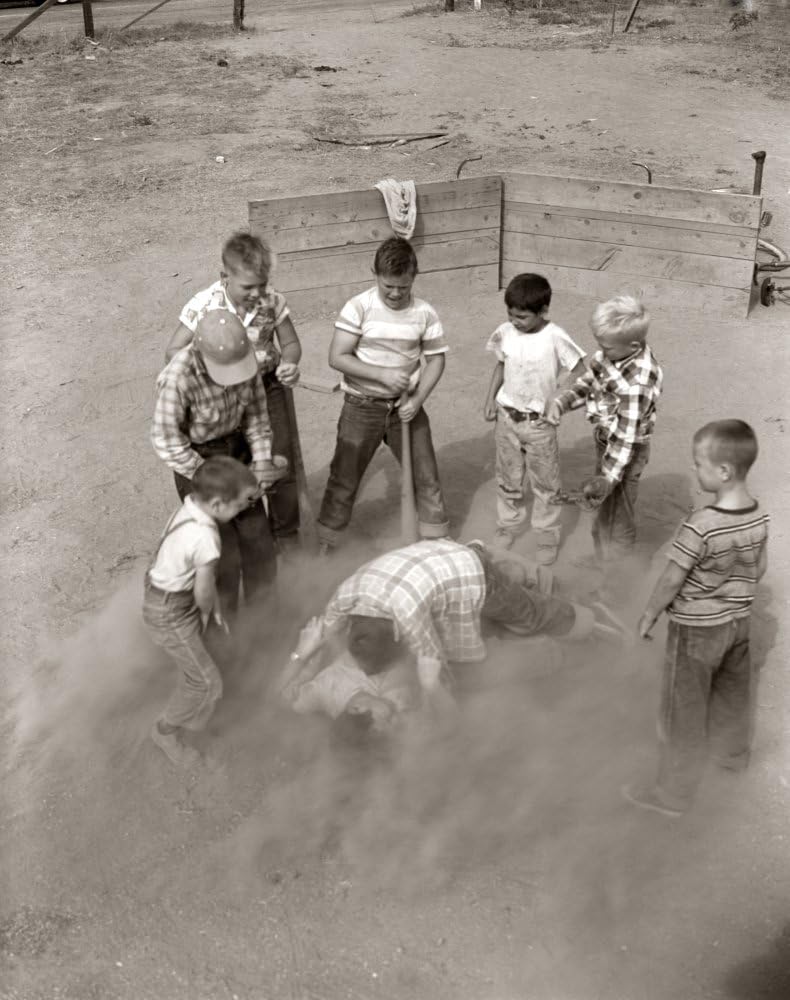

The Schoolyard Fight: 3 Things We Buried With It
I watched boys settle it themselves once. And I watched them shake hands after. I have never forgotten either thing.
There is a video circulating — a transcript, really, of a voiceover essay about fifteen skills that American boys once learned before the age of twelve. Tying knots. Sharpening a blade. Building a fire with one match. Reading a map. Fishing and cleaning what you caught. Navigating a bicycle five miles alone. Carrying a paper route. Being bored long enough to meet yourself in the silence.
I will not pretend I was unmoved by it. I remember the schoolyard fights and what they meant.
I was appalled.
Not at the video. The video is accurate. I was appalled at the recognition — the slow, uncomfortable recognition that we did this–eliminated the schoolyard fight. That the losses it describes were not accidents. They were choices, made systematically, decade by decade, in the name of safety and inclusion and the eradication of harm. And that the men we are producing now — hollow, fragile, rudderless at twenty-five — are precisely the men those choices were always going to produce.
I Have Seen This With My Own Eyes: The Schoolyard Fight
I spoke about this once on a live stream — about the schoolyard fights. About what they looked like in the era when they were still permitted to be what they were: two boys, a disagreement, a reckoning, and a handshake.
The handshake is the part no one remembers anymore about the schoolyard fight. Or perhaps they never knew it. The fight happened. Someone took the hit. Someone gave it. The thing that needed to be established — hierarchy, boundary, grievance, pride — got established in the only language that particular conversation could be had in. And then it was done. And they shook hands.
Not because anyone told them to. Because that was the protocol. Because the schoolyard fight was not the end of the relationship. It was a renegotiation of it. Both boys knew this. The watching boys knew this. Everyone present understood that what had just happened was not a catastrophe. It was a conversation in a register that words had failed to reach.
And then they played together at recess the following Monday.
What We Called It Instead–the Schoolyard Fight
We called it violence. We called it trauma. We called it a safeguarding failure.
We wrote policies. We installed cameras. We created zero-tolerance frameworks and mandatory reporting protocols and social-emotional learning curricula designed to teach boys, in forty-five-minute classroom sessions, to “use their words” instead of engaging in the schoolyard fight.
And then we were puzzled — genuinely puzzled — when the boy who had been carefully protected from every consequence, every physical confrontation, every moment of unmediated conflict with another person, arrived at twenty-two unable to handle a difficult conversation with his employer. Unable to accept a no from a woman. Unable to absorb a professional setback without spiraling. Unable to look another man in the eye and say: I was wrong, and I am sorry.
He was never given the chance to learn any of those things. The schoolyard was the laboratory. We shut it down.
The List Is Not About Nostalgia
The video essay I watched frames fifteen skills — knots, knife-sharpening, fire, navigation, fishing, the bicycle, the paper route, the job, the money, the voice trained on memorized poetry, the manners, the disappointment, the confession, the silence, and the trustworthiness that is the cumulative product of all the others. It frames them well. And it is careful to say: this is not nostalgia.
I want to go further than that. This is not even primarily about skills.
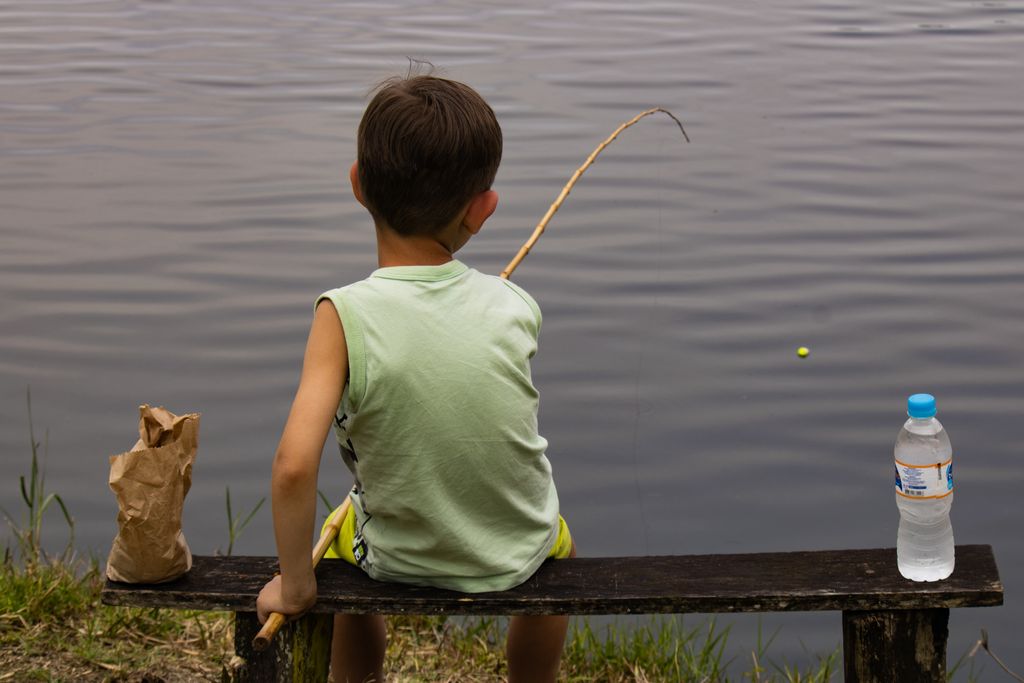
Every item on that list is a form of contact with reality. Contact with rope that has real tensile properties. Contact with steel that takes an edge or doesn’t. Contact with wood that burns or won’t catch. Contact with a map that corresponds, or fails to correspond, to actual ground under actual feet. Contact with a fish that was alive and is now food. Contact with weather and distance and the specific sensation of being two miles from home with a flat tire and no adult in sight.
Contact. With. Reality.
The modern boy is being raised in a mediated world — mediated by screens, by algorithms, by adults who stand between him and every consequence, every difficulty, every physical risk, every unpleasant truth about his own limitations. He is receiving reality secondhand, pre-digested, curated for palatability. And out the other end of that childhood comes a young man who has, in the most literal possible sense, never touched the world.
A Woman Writing About Boys
I am aware that I am a woman writing about the formation of boys, and I want to be direct about why I think that matters and why I am doing it anyway.
Women are not outside this story. Women were the mothers who rang the dinner bell at six and did not worry before it rang. Women were the grandmothers who sent boys to the creek with a cane pole and a worm and no instructions beyond “be back before dark.” Women were the teachers who assigned the poem to be memorized and did not accept anything less than recitation from memory, with feeling, in front of the class.
And it was also women — and I include myself in the cultural moment that produced this — who accepted, decade by decade, the framework that said: male roughness is the problem. Male competition is the problem. Male hierarchy is the problem. Unmediated male experience is the problem. All of it needs to be supervised, softened, and corrected.
We were wrong. And the men our boys became — the ones sitting in their childhood bedrooms at twenty-six, unable to launch, unable to commit, unable to hold a difficult conversation without it becoming a crisis — those men are in part our work. Not intentionally. Not maliciously. But consequentially.
The Handshake Is the Point
I keep coming back to the handshake.
Because everything that is wrong with what we have done to boys is in the disappearance of the handshake. The fight itself — the physical reckoning — I am not arguing for its return, though I am arguing that the impulse it once resolved has not gone away simply because we outlawed its expression. But the handshake.
The schoolyard fight and the handshake says: I am still here. You are still here. We have had our reckoning, and we are not destroyed by it. You can look me in the eye. I can look at you. We are men — or we will be — and men do not nurse grievances forever over things that have been settled.
The handshake is resilience in physical form. It is the body encoding the lesson before the mind has words for it. And we took it away.
What did we replace it with? Processing. Journaling. Circle time. Restorative practices facilitated by a trained adult mediator.
I am not mocking those things wholesale. I am saying that they are not the same thing. They are the administered version of a natural process, and the administered version produces a different result. It produces a boy who knows how to talk about conflict with a facilitator present. It does not produce a man who can absorb conflict, process it in his own body, and extend his hand to the person on the other side of it.
What Is Still Possible
The essay ends with an image I find genuinely beautiful: a boy, right now, somewhere, sitting cross-legged on a flat rock with a pocket knife and a green willow stick, shirt muddy, shoes wet, nobody knowing quite where he is.
That boy exists. In places like the village where I live — small, quiet, rooted in an older world — he still exists. He is not a relic. He is a possibility.
And the question the essay poses at the end is the right one: the choice is yours, and it is a real one.
Give a boy a knife and a stick and three unsupervised hours. Teach him to tie six knots. Make him memorize a poem and recite it aloud. Let him earn money and manage it himself. And when the schoolyard reckoning comes — as it will come, because it always comes — step back. Let it happen. Watch for the handshake.
That is where it starts again.
Or where it doesn’t.
©2026 Carolyn Smith-Kizer
BTW: my only son is a deputy sheriff in Eastern Idaho and I have six grandsons and one great grandson, so I have a vested interest in the outcome of men’s lives.


It’s lovely that it happens in your village.
Perhaps it happens more in the countryside.
Also those boys are not glued to their social media
or their iPhones.
Warm regards, Elise
You are so right! They are not glued to their screens–that is a win!!♥